You 'd find yourself in a position where you need to pay back the loan at a time when doing so might be impossible if you need a prolonged remain in a long-lasting center. A reverse home mortgage lender can foreclose and take your home if you stop working to pay back the loan when you move out. what is an underwriter in mortgages.
Another downside is the continuous expense of keeping your home. You'll be required to stay up to date with your house's associated expenditures. Foreclosure is possible if you discover yourself in a position where can't keep up with home taxes and insurance coverage. Your loan provider may "set aside" a few of your loan continues to satisfy these costs in the event that you can't, and you can also ask your lender to do this if you believe you may ever have problem spending for real estate tax and insurance coverage.
Your lender might select foreclosure if and when your loan balance reaches the point where it surpasses your house's value. On the favorable side, reverse mortgages can supply money for anything you desire, from additional retirement income to cash for a big house improvement project. As long as you satisfy the requirements, you can utilize the funds to supplement your other incomes or any cost savings you have actually accumulated in retirement.
A reverse mortgage can definitely alleviate the stress of paying your costs in retirement or perhaps enhance your way of life in your golden years. Reverse home loans are only readily available to homeowners age 62 and older. You generally don't have to repay these loans up until you vacate your home or pass away (how do interest rates affect mortgages). If the borrower requires more money throughout or after that term, they can access the line of credit. It's likewise possible to use a reverse home loan called a HECM for purchase" to purchase a different home than the one you presently reside in. In any case, you will generally require at least 50% equitybased on your home's existing value, not what you spent for itto receive a reverse home loan.
More About What Are The Interest Rates On Reverse Mortgages
The number of reverse home mortgages provided in the U.S. in 2019, down 35. 3% from the previous year. A reverse home loan may sound a lot like a house equity loan or credit line. Certainly, comparable to among these loans, a reverse mortgage can provide a swelling sum or a line of credit that you can access as required based upon how much of your house you've paid off and your house's market value.
A reverse mortgage is the only method to gain access to home equity without offering the home for senior citizens who do not want the obligation of making a regular monthly loan payment or who can't qualify for a house equity loan or re-finance because of minimal capital or bad credit. If you don't get approved for any of these loans, what choices remain for using home equity to fund your retirement!.?. !? You might sell and downsize, or you could sell your house to your kids or grandchildren to keep it in the household, possibly even becoming their occupant if you desire to continue living in the house.
A reverse home loan permits you to keep residing in your house as long as you keep up with residential or commercial property taxes, maintenance, and insurance and don't require to move into a retirement home or helped living facility for more than a year. However, taking out a reverse home mortgage indicates investing a considerable amount of the equity you've accumulated on interest and loan fees, which we will discuss listed below.
If a reverse home loan doesn't provide a long-lasting solution to your monetary issues, just a short-term one, it might not deserve the sacrifice. What if somebody else, such as a buddy, relative or roomie, deals with you? If you get a reverse home mortgage, that individual will not have any right to keep residing in the house after you pass away.
10 Easy Facts About What Are Today's Interest Rates On Mortgages Shown
If you choose a payment plan that doesn't supply a lifetime earnings, such as a lump sum or term strategy, or if you take out a line of credit and utilize it all up, you might not have any cash left when you need it. If you own a house, condominium or townhouse, or a made house built on or after June 15, 1976, you may be eligible for a reverse home loan.
In New York, where co-ops are typical, state law even more forbids reverse home mortgages in co-ops, allowing them just in one- to four-family homes and condominiums. While reverse mortgages don't have earnings or credit history requirements, they still have rules about who qualifies. You should be at least 62, and you need to either own your home totally how much are maintenance fees for timeshares free and clear or have a considerable quantity of equity (a minimum of 50%).
The federal government limits just how much lending institutions can charge for these items. Lenders can't go after borrowers or their heirs if the home ends up being undersea when it's time to sell. They also must enable any successors several months to choose whether they want to pay back the reverse home mortgage or enable the loan provider to offer the house to pay off the loan.
This therapy session, which generally costs around $125, should take at least 90 minutes and need to cover the advantages and disadvantages of securing a reverse mortgage provided your special monetary and personal scenarios. It should explain how a reverse mortgage might affect your eligibility for Medicaid and Supplemental Security Income.
Rumored Buzz on What Percentage Of Mortgages Are Fannie Mae And Freddie Mac
Your obligations under the reverse home loan rules are to remain current on property taxes and house owners insurance coverage and keep the home in excellent repair work. And if you stop living in your home for longer than one yeareven if it's because you're living in a long-term care facility for medical reasonsyou'll have to repay the loan, which is normally achieved by selling your home.
In spite of current reforms, there are still circumstances when a widow or widower could lose the house upon their partner's death. The Department of Real Estate and Urban Advancement adjusted the insurance premiums for reverse mortgages in October 2017. Given that lending institutions can't ask homeowners or their heirs to pay up if the loan balance grows larger than the house's worth, the insurance premiums offer a swimming pool of funds that lenders can make use of so they don't lose cash when this does occur.
5% to 2. 0% for 3 out of 4 borrowers and a decline in the premium from 2. 5% to 2. 0% for the other one out of 4 debtors. The up-front premium used to be tied to just how much customers got in the first year, with property owners who took out the mostbecause they required to pay off an existing mortgagepaying the greater rate.
0% rate. The up-front premium is calculated based upon the house's worth, so for every single $100,000 in appraised value, you pay $2,000. That's $6,000 on a $300,000 home (what are click here reverse mortgages and how do they work). All borrowers need to likewise pay annual home mortgage insurance premiums of 0. 5% (previously 1. 25%) of the quantity borrowed. This change conserves borrowers $750 a year for every single $100,000 obtained and assists offset the higher up-front premium.
Some Ideas on When Did 30 Year Mortgages Start You Should Know
To obtain a reverse mortgage, you can't simply go to any loan provider. Reverse home mortgages are a specialty product, and just certain lending institutions provide them. A few of the most significant names in reverse home mortgage financing include American Advisors Group, One Reverse Home Mortgage, and Liberty Home Equity Solutions. It's an excellent idea to use for a reverse home mortgage with a number of companies to see which has the most affordable rates and fees.
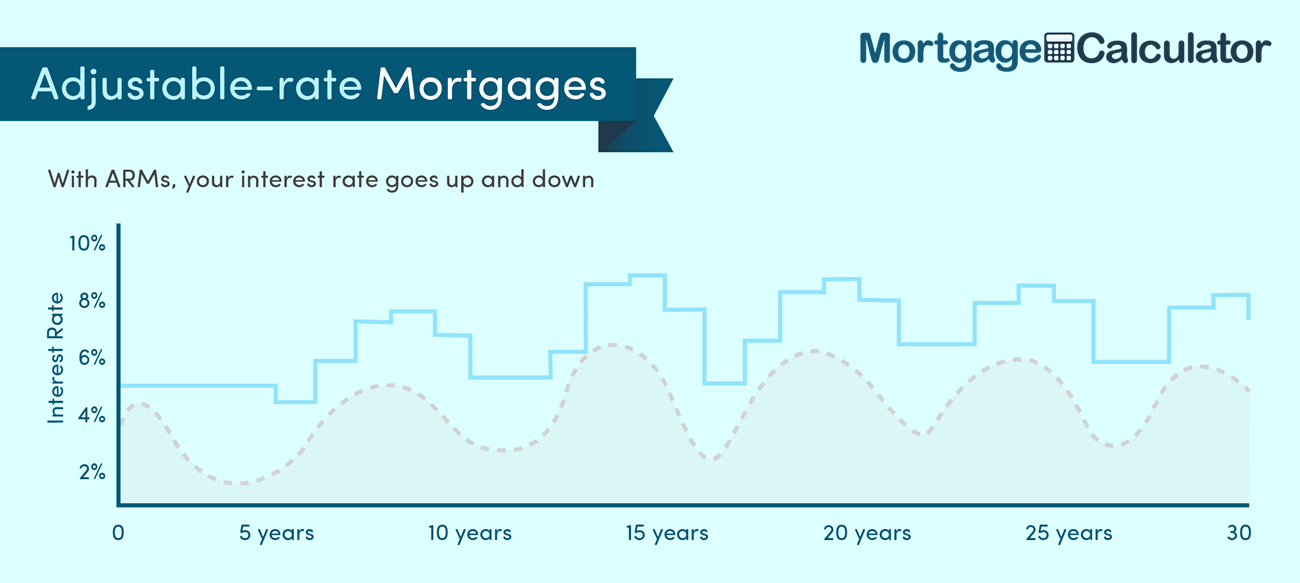
Just the lump-sum reverse home loan, which provides you all the profits at once when your loan closes, has a set rates of interest. The other five alternatives have adjustable rates of interest, which makes sense, given that you're obtaining cash over many years, not at one time, and interest rates are constantly changing.
In addition to one of the base rates, the lender includes a margin of one to 3 percentage points. So if LIBOR is 2. 5% and the lender's margin is 2%, your reverse mortgage interest rate will be 4. 5%. As of Jan. 2020, loan providers' margins varied from 1. 5% to 2.